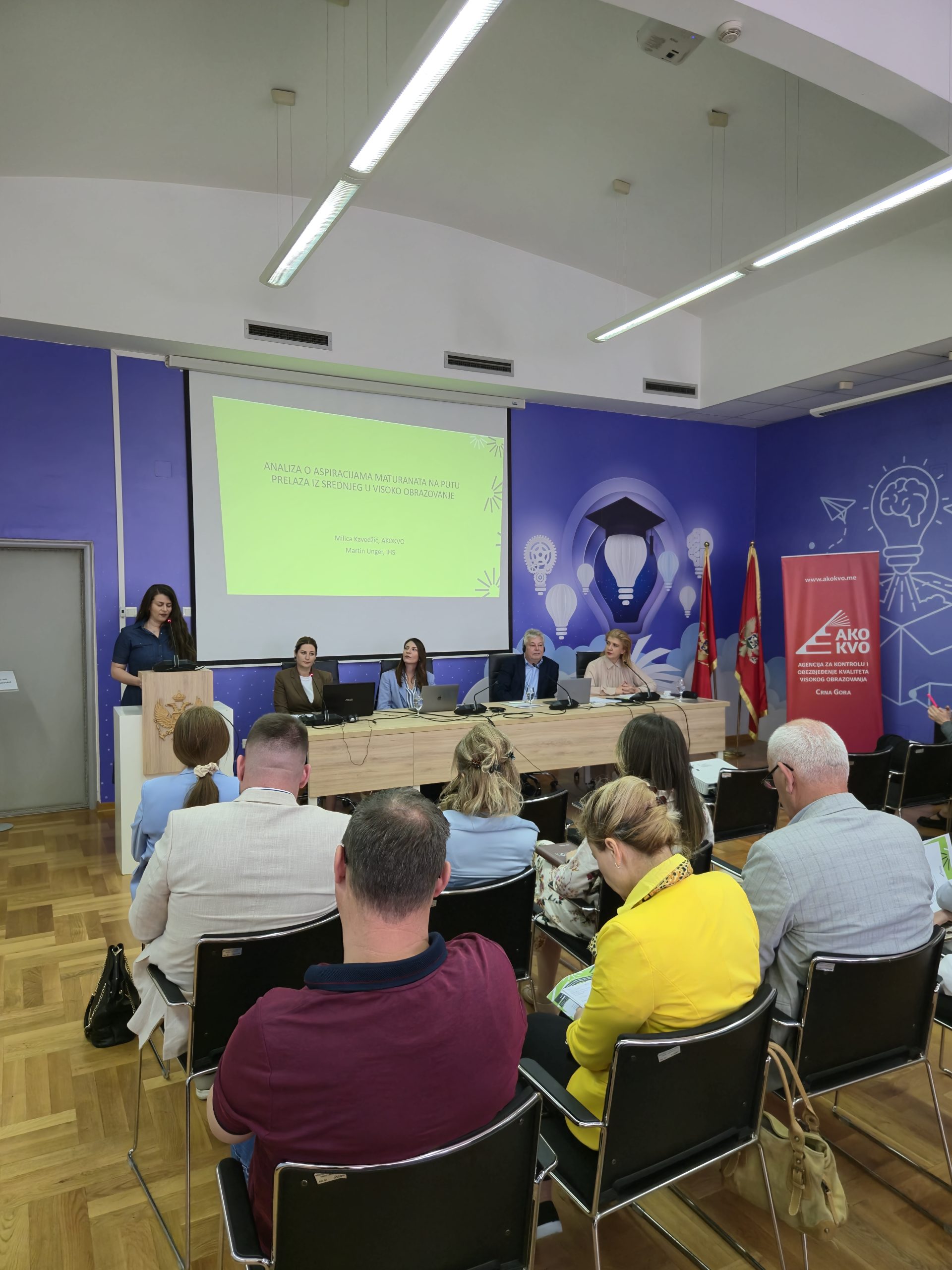
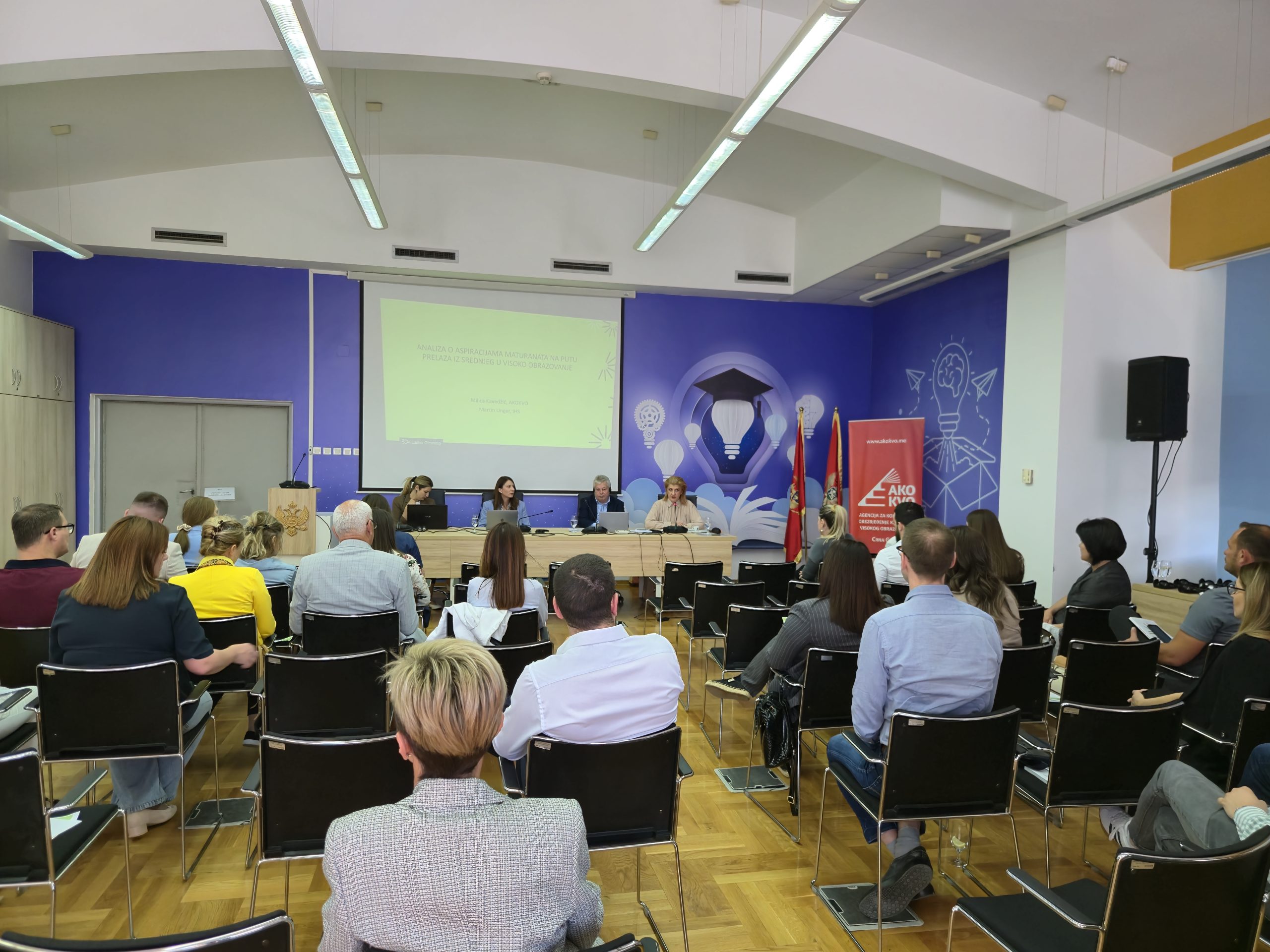
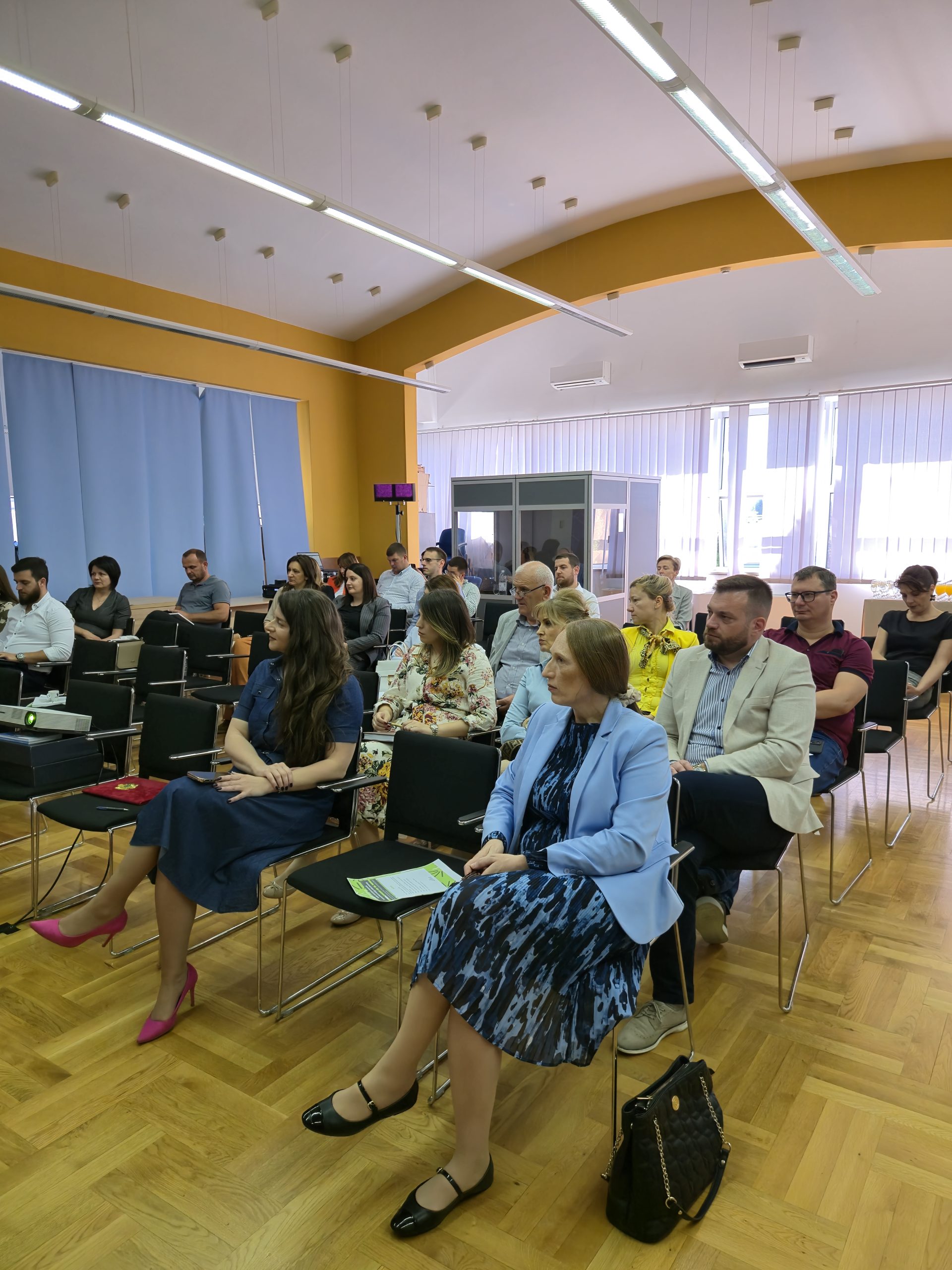
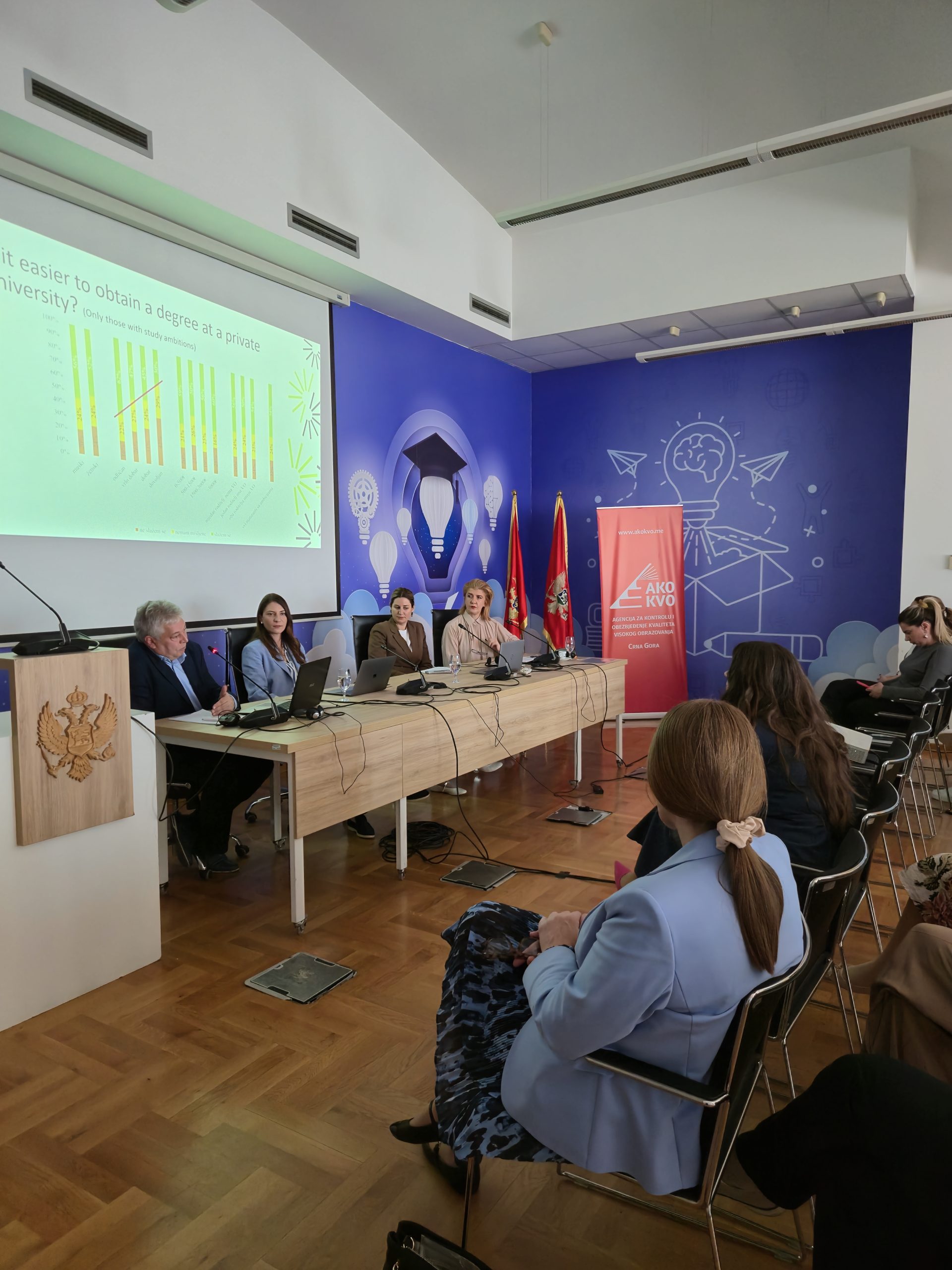
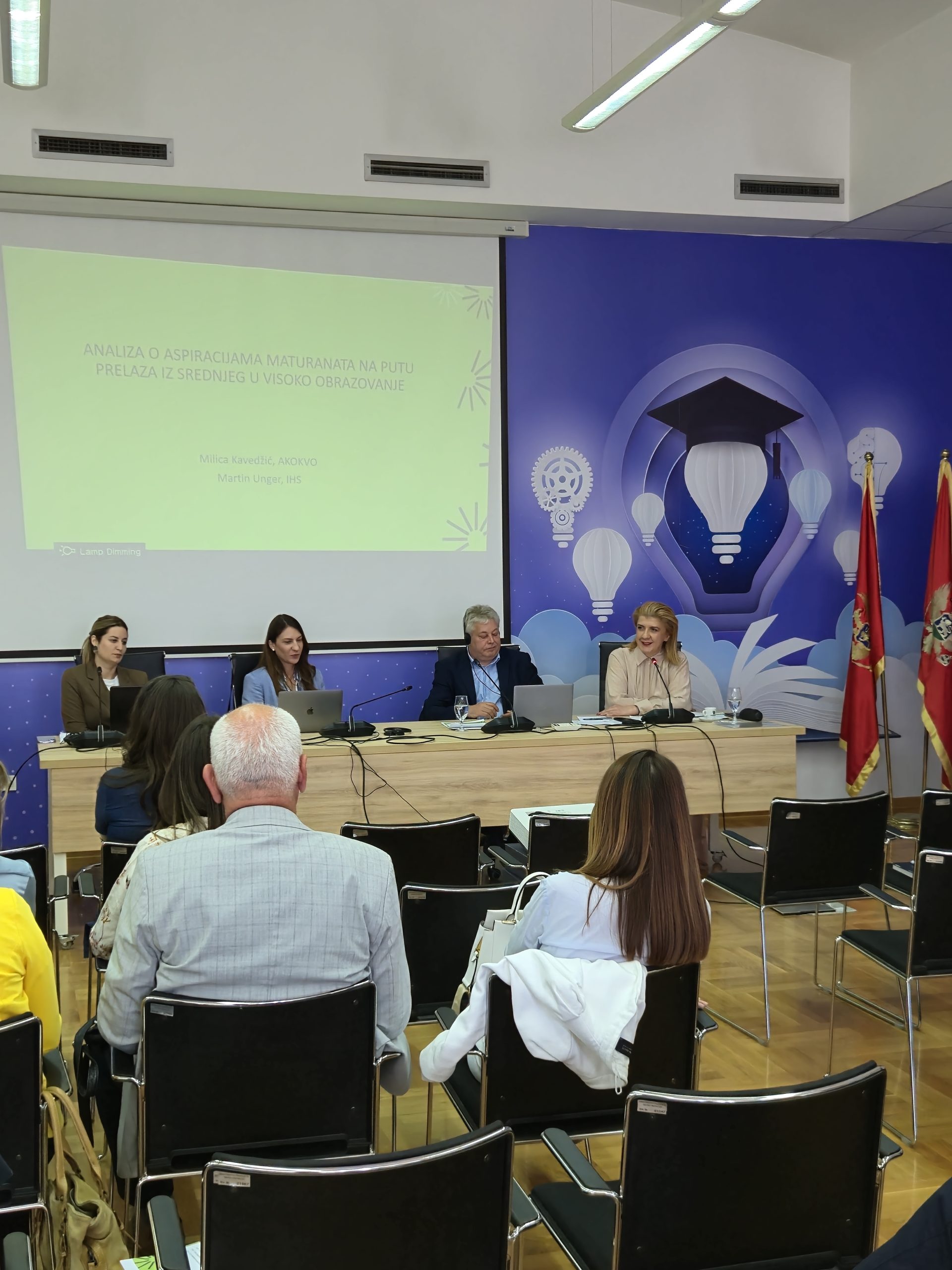
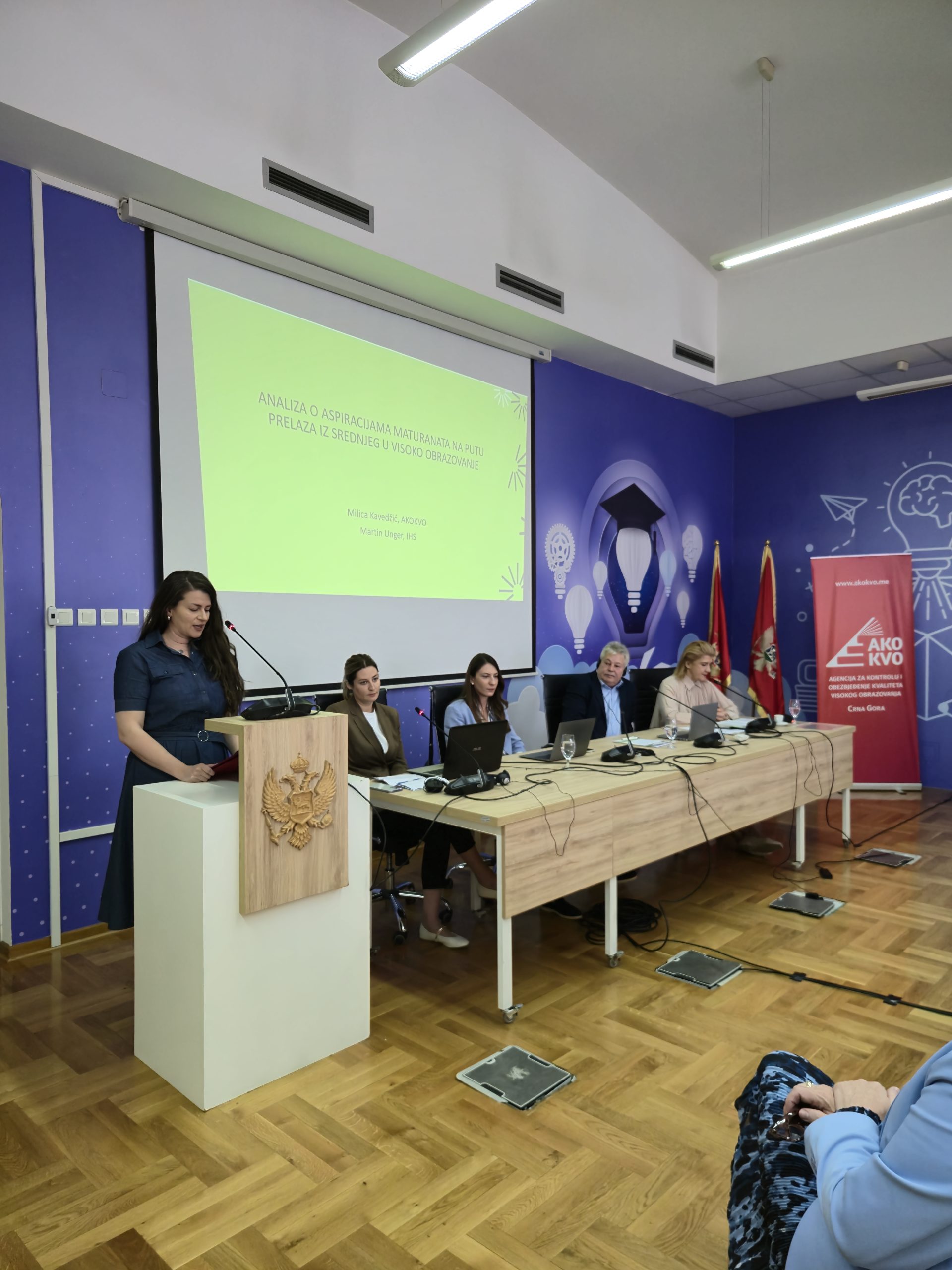
At the premises of the Ministry of Education, Science and Innovation, a presentation of the monograph “Analysis on High School Graduates’ Aspirations During the Transition from Secondary to Higher Education“ was held, organized by the Agency for Control and Quality Assurance of Higher Education (ACQAHE). The event was attended by representatives of the Ministry, secondary and higher education institutions, and featured speakers such as Marija Gošović, Director General of the Directorate for General and Vocational Education at the Ministry; Tatjana Ćalasan, Acting Director of ACQAHE; Martin Unger, Head of the Higher Education Research Group at the Institute for Advanced Studies in Vienna; and Milica Kavedžić, Assistant Director at ACQAHE in the Quality Assurance and Research Sector.
As stipulated by the Law on Higher Education, the Agency is responsible for ensuring quality in accordance with European standards and guidelines. One of these standards involves conducting thematic analyses and proposing measures aimed at improving the quality of higher education, explained Marija Gošović in her opening of the presentation.
The idea to investigate high school graduates’ aspirations during the transition to higher education emerged in the second half of 2023, with the aim of understanding their motivations, desires, plans, and level of awareness, as well as identifying tools that could assist them in making informed decisions. Gošović emphasized that this transition is crucial not only for their individual paths and professional success but also for society and the economy as a whole.
Gošović also highlighted the success of the research, pointing out that 35 percent of all high school graduates in Montenegro (1,780 students) from 45 schools across 23 municipalities participated in the survey.
The analysis offers new, valuable insights—ranging from the social background and academic achievements of students to their perceptions of the quality and accessibility of higher education, and the differences between public and private institutions. Especially important is the identification of specific needs for more information and guidance to help students make thoughtful decisions aligned with their own potential and ambitions, Gošović concluded.
Acting Director Tatjana Ćalasan began her remarks by quoting students from various Montenegrin towns and emphasized that the analysis should be targeted not only at students but also at all key stakeholders and policymakers in the education system.
Ćalasan pointed out that this is the first analysis of its kind not only in Montenegro but also in the region, representing an initial step and a solid foundation for further research in this area as well as for enhancing the quality of education.
The specific research findings were presented by the editors of the monograph, Milica Kavedžić and Martin Unger. One of the key findings was the low correlation between parents’ education and household income with students’ academic performance—suggesting that the education system is relatively effective at compensating for disadvantages arising from lower parental education or income levels. On the other hand, gender disparities in academic achievement were significant: twice as many male students achieved predominantly “good” results compared to female students, while nearly half of female students achieved excellent results.
Students from the northern region—where a large number come from low-income families—performed worse academically and expressed significantly lower intentions to pursue higher education. Improving economic conditions in this region is a long-term challenge for decision-makers. Measures aimed at enhancing student achievement and educational aspirations would be particularly valuable in the north, Kavedžić noted.
The plans of graduating students also yielded important findings: 34 percent wish to study at public universities, 15 percent at private universities in Montenegro, while 22 percent plan to study abroad. About 29 percent either do not intend to pursue higher education or are still undecided. Among those intending to pursue higher education, 70 percent want to study in Montenegro, although 61 percent believe foreign universities offer higher quality education, Unger explained.
Approximately half of those planning to study agree that the quality of education at public higher education institutions is higher than at private ones. When evaluating whether a degree from a public university is considered “more prestigious,” the contrast in academic outcomes becomes even more pronounced. Most students also believe that it is easier to obtain a degree from a private university.
Based on these findings and recommendations, education policymakers in Montenegro should begin taking concrete steps to support students in making better-informed decisions regarding their educational future. The editors concluded by expressing hope that the presented results will not only be useful in this regard but will also serve as inspiration for further research by all interested stakeholders.
The presentation of the Аnalysis is available at the following link.